
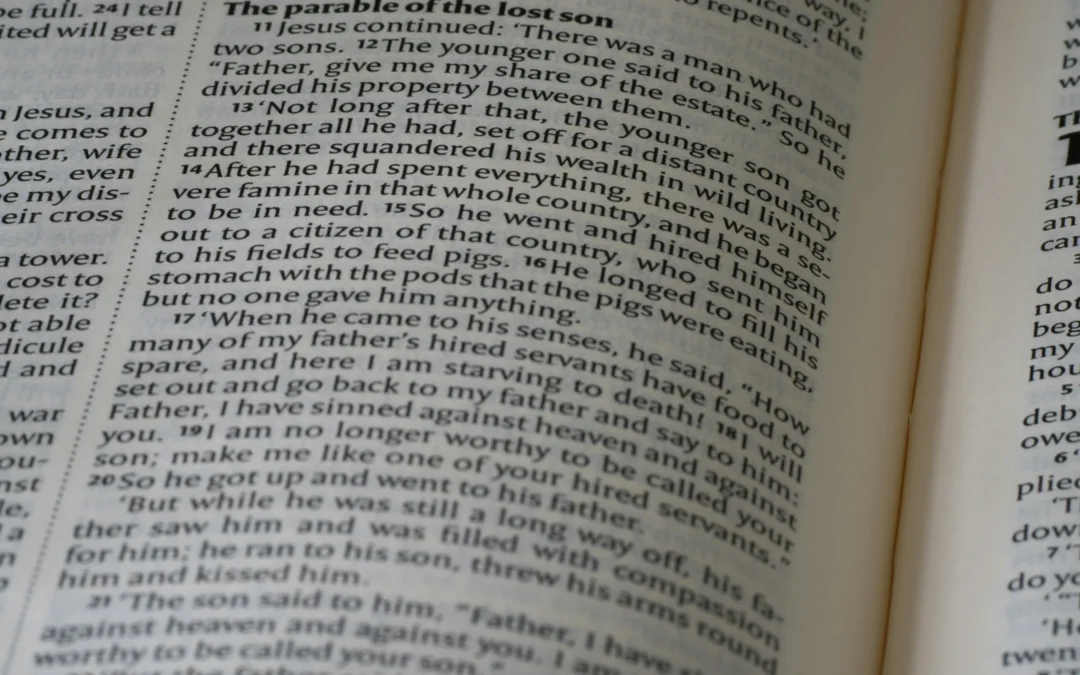
Jesus’s parable of the lost son, or the prodigal son, is among the most well-known texts in the Bible.
The parable is, evidently, a rebuke to those who questioned Jesus’s affinity with sinners. The younger son’s sin is extremely vile and reprehensible. By asking his father for his share of the property, he is effectively saying, “I can’t wait until you’re dead, so pay now what is due to me.” The father, who represents God in the parable, not only obliges, he freely forgives his son and even throws a party upon his return. Some refer to this act as scandalous grace, referring to the shocking and radical nature of God’s forgiveness.
Of course, the parable doesn’t end with the return of the prodigal son, but goes on to talk of the estrangement of the older brother. He is clearly scandalised by the father’s generous display of grace. As Tim Keller has underlined it so well in his teachings, Jesus is largely addressing the so-called ‘elder brother mentality’ among religious-minded people. Those who think they are close to God, like the older brother who stayed with the father when the prodigal son walked off, could well be in a more dangerous position, as they may be estranged without knowing it.
There is much to glean from this beautiful parable – it is the proverbial gift that keeps on giving. Sinclair Ferguson’s excellent book, The Whole Christ, and its brief commentary on this parable gives great insights on the role of God’s grace in our salvation.
A tale of two speeches
What’s particularly striking is the presence of two almost identical speeches made by the prodigal son. The first is a rehearsal of the speech he plans to make to his father upon his return: “Father, I have sinned against heaven and against you. I am no longer worthy to be called your son; make me like one of your hired servants.”
The second is what he actually ends up saying when he meets his father: “Father, I have sinned against heaven and against you. I am no longer worthy to be called your son.”
Before he can complete his speech and offer his services as a hired servant, his merciful and generous father cuts him short, and announces a grand party to celebrate the return of his son. Why? “For this son of mine was dead and is alive again…” The father will not entertain any thought of treating his son as a servant, or as one who owes him something because of his sin and rebellion.
The last line in the rehearsed version of the speech is an intriguing inclusion in Jesus’s parable, and provides a wonderful insight on how we typically understand man’s role in salvation.
Make me like one of your hired servants
The prodigal son had made a pig of himself with his lavish lifestyle and, unsurprisingly, had ended up with the pigs. “When he came to his senses, he said, ‘How many of my father’s hired servants have food to spare, and here I am starving to death!” In short, he figured his needs will be supplied for in his father’s home.

“But while there is the supply of his needs in the home of his father, he is – very naturally – still wrestling with the lie that God’s favour needs to be earned,” writes Ferguson.
How did the prodigal son view the father? Did he see him as a gracious and merciful father, who would be slow to anger and abounding in steadfast love and forgiveness? Or is he apprehensive about God’s benevolent character?
The omitted line from his rehearsed speech, “Make me like one of your hired servants,” answers these questions fairly well.
It betrays a belief that God’s grace and mercy is limited, and needs to be supplemented by some form of penance or contribution by man. ‘I can expect the father to take me back home, but certainly not as a son, since I’ve already squandered my share of the property. What rights do I have to qualify as a son? None. My best shot would be to plead for his mercy to allow me to stay on as a servant, who works on wages, hoping to somehow pay back the father.’ The prodigal son’s understanding of salvation is that it’s a combination of God’s grace combined with our works. ‘I certainly can’t stand upon my works; but I can’t rely entirely on God’s grace either. Both are needed.’
The Father’s emphatic response, cutting short the grace plus works speech of the prodigal son, shows that his plan of salvation is grace, grace, grace all the way.
‘No son, it doesn’t depend on whether you’ve repented enough, or your plan for adequate restitution. Indeed, it doesn’t depend on anything you can possibly do. I welcome you out of the abundance of my own heart. You’re my son, and I’m just overjoyed to have you back.’
While the Scripture doesn’t elaborate on the younger son’s response to this display of lavish grace, it stands to reason that this new revelation would have led to a radical shift in the prodigal son’s view of the Father.
“See what great love the Father has lavished on us, that we should be called children of God! And that is what we are!”
When such great truths about God’s character sink into our heart, what naturally flows is a heart of repentance and obedience. Before this encounter, the prodigal son was mainly thinking about his own needs, and how he could try and earn the favour of the father. An encounter with God’s lavish grace changes everything. Most importantly, it can result in true repentance. Ferguson quotes Calvin’s Institutes, “Repentance not only constantly follows faith, but is also born of faith… A man cannot apply himself seriously to repentance without knowing himself to belong to God. But no one is truly persuaded that he belongs to God unless he has first recognised God’s grace.”
In a slightly different way, these truths become evident in the response of the older brother as well. He isn’t persuaded he belongs to God purely as a result of His grace. On the contrary, he is convinced God’s favour is earned through good works. “Look, these many years I have served you, and I never disobeyed your command, yet you never gave me a young goat, that I might celebrate with my friends. But when this son of yours came, who has devoured your property with prostitutes, you killed the fattened calf for him!”
A display of God’s lavish grace, unfortunately, drives him to despair, rather than to repentance. As Calvin put it, it all starts with recognising God’s grace. Without this, our hearts remain unrepentant.
Personal story
I’ll never forget the time I was having a major disagreement with my wife, Sushi, some years ago. She was upset about something foolish I had done, and I was upset that she was upset. I should have apologised and tried to mend the relationship. I didn’t. As time passed, I started to feel very troubled in my soul. I couldn’t get myself to do the right thing; and that led me to beat myself up for not being able to do it. I just felt badly stuck.
By God’s grace, I felt led to call Naren, a dear friend, to pray for me. I explained my predicament; he heard me out, and prayed. As he prayed, I experienced God’s grace and forgiveness. It felt like such a wonderful release; I was finally able to move toward God and toward Sushi.
You see, when I was telling myself I need to get things right and repent “enough”, I was getting more and more stuck. When I reached out for God’s grace, I was able to move in repentance.
Of course, all this is in no way to downplay the important role of repentance in salvation. But certainly, it’s a revelation of God’s grace and mercy that helps us move in repentance.
It’s apt to close with Ferguson’s counsel: “Faith will always be penitent; repentance will always be believing if genuine.”